2025 In Review: Celebrating the Power of Partnerships
Updated: Dec 2, 2025

From budget cuts to the government shut down, 2025 brought challenges to our national parks. For National Parks of Lake Superior Foundation (NPLSF), however, it was a time of enormous progress.
We rallied support for our parks at the most difficult times and launched several important new programs.
Partnerships were the key to our success in 2025, and will continue to be the foundation of our work as we move into 2026, our 20th Anniversary Year.
“Two of Lake Superior’s national parks are co-managed by the Grand Portage Band of Lake Superior Chippewa and that partnership has and will continue to be particularly vital,” said NPLSF Executive Director Tom Irvine. “We’ve also forged new relationships with state leaders that have also powered progress in these complex times for our parks.”
As the nonprofit philanthropic partner of Lake Superior’s five national parks, NPLSF is a vital partner in securing and using private investment to improve our parks. With our focus on the entire Lake Superior region, we can also tackle larger ecological and cultural resource projects that span multiple states and parks.
Our work takes place through four major program areas: wildlife and ecology; cultural and historic resources; park infrastructure and resilience; and education, interpretation, and engagement. In 2025 we powered progress across these initiatives. Here are just a few key highlights.
Protecting our lake’s ecosystem—and its most majestic resident
Lake Superior not only holds 10% of the earth’s surface freshwater, its forests, wetlands, shorelines, and other natural areas form vital habitat for a vast network of wildlife.

Park staff and other scientists are committed to protecting rare and endangered species in our parklands, and in 2025 NPLSF made new investments in acoustic bat monitoring at Apostle Islands National Lakeshore and will be supplementing existing funding for acoustic amphibian monitoring in all parks. We also began a vital project with Pictured Rocks National Lakeshore to restore a trout stream within the park’s Beaver Basin Wilderness.

One of our most important new initiatives focuses on moose — Mooz in the Anishinaabe language. Moose have long roamed Minnesota’s boreal forests and for both Indigenous and non-Indigenous communities, they are a living emblem of strength, sustenance, and deep connection to the northern wilderness. Unfortunately, moose have been struggling. Over the past two decades, northeastern Minnesota’s moose population has fallen by nearly 60%.
This year, NPLSF joined with the Minnesota Department of Natural Resources, 1854 Treaty Authority, and Grand Portage Band to launch the Northern Moose Alliance–a major new effort to protect this iconic species.
The partnership is leading a major new study on juvenile moose, a missing link in current research, with funding provided by the Minnesota Environment and Natural Resources Trust Fund (ENRTF) as recommended by the Legislative-Citizen Commission on Minnesota Resources (LCCMR) and matching support from the Grand Portage Band.
NPLSF is hosting the effort’s new moose biologist, Adam Mortenson, and will be leading efforts to bring the public into the work of the Alliance.
“People care about moose but don’t understand the threats to their survival or the vital scientific work underway by our state and tribal organizations,” says Irvine. “This project will produce a tangible and compelling scientific record of young moose in Minnesota and beyond and we want to create educational resources as well as engage the public in sharing their own moose sightings and trail cam data.”
The Northern Moose Alliance formally launched at the very end of 2025—expect to see much more about this exciting project in the coming months and years!
Initiatives to restore and celebrate cultural resources

Lake Superior’s national parks are home to unique landmarks that commemorate multiple eras of history—from thousands of years of Indigenous use of the land to fur trading and European fishing villages twentieth century mining and maritime eras.
In 2026 we hope to expand our infrastructure support. Projects under discussion include support for the Outer Island Light Station at Apostle Islands, safety improvements to Grand Portage National Monument’s Mount Rose trail loop, and several projects at Keweenaw National Historical Park.

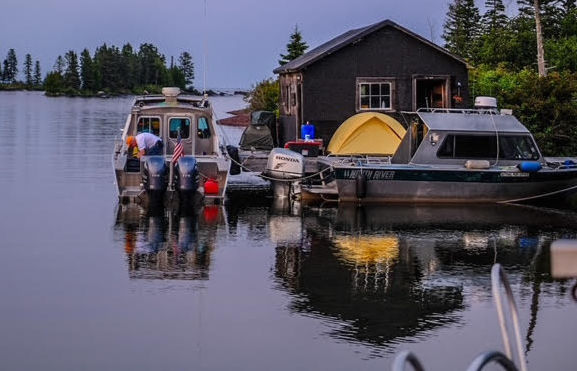
Over the summer we engaged a team of volunteers to undertake a massive cataloging and clean-up at Fisherman’s Home, a historic commercial fishing camp at Isle Royale.
"This is the second site cleanup we have done with the hard-working NPLSF board members. Both have been great team efforts—and I appreciate the help from Grand Portage, the NPLSF, and staff from Apostle Islands National Lakeshore,” said Isle Royale National Park Superintendent Denice Swanke.

NPLSF’s partnership with the Grand Portage Band to share the Band’s historic connection with Isle Royale has been a key focus of our interpretation work this year. The project, which received seed funding from the National Park Foundation, is transforming the Band’s new Hat Point Ferry Terminal into a vibrant exhibit area that celebrates the importance of the island, known as Minong, or “The Good Place” in Anishinaabe.
“Our name for Isle Royale meaning 'the Good Place' relays how we think of Isle Royale. However, few non-Indigenous people know much about that historic and contemporary relationship. Our building of a new Ferry Terminal Building from which one third of Isle Royale visitors depart for Minong is a perfect venue for an exhibit explaining our connections to the Good Place.” — April McCormick, Secretary/Treasurer, Grand Portage Band of Lake Superior Chippewa
NPLSF Board Member Tim Cochrane has served as volunteer project manager for this partnership-based effort and we hope to open the exhibit in spring 2026, when it will host the many visitors who pass through the ferry terminal on their way to Isle Royale.
Infrastructure that adds resilience and moves our parks off fossil fuel

Through our groundbreaking “Decarbonize the Parks” initiative, NPLSF has been working to help our parks transition their buildings and operations to clean electricity. 2025 was a year of exciting progress in this work, with new solar power at Isle Royale National Park now near completion and new e-cargo bikes helping park staff avoid vehicle use.

Energy efficiency is a vital ingredient in increasing park resilience and saving money and one of our most exciting projects this year involved winterizing and dramatically improving the efficiency of a dormitory building on Isle Royale. Thanks to a major contribution from an individual donor, the building will soon be available as winter housing for park staff and scientists who visit the island for research in winter months.
In 2026 we will continue to work park-by-park on projects to decarbonize and build resilience in our parks.
Connecting people to our parks with education, interpretation
NPLSF makes it a priority to help young people learn about Lake Superior’s national parks through curriculum and in-park programming.
In 2025 we supported the second year of Agaaming Aki (land across the water), an Indigenous youth education program sharing traditional ecological knowledge at Grand Portage and Isle Royale. We regularly support teen ranger programs and in 2026 we plan to advance new youth education programming through the Northern Moose Alliance.

We sponsored another successful Rendezvous Days weekend at Grand Portage National Monument, a free annual event with music, dancing, crafts, and historic reenactment that celebrates history on the shores of Lake Superior. This year’s celebration revisited 1797, a time when North West Company agents, clerks, and partners gathered to conduct business and Anishinaabe, Cree, and other Native families gathered by the shore to trade and reunite with friends and family. NPLSF is also the proud sponsor of the Lutsong Music Festival.
As we celebrate our 20th Anniversary in 2026, NPLSF will be partnering with arts and culture groups across the region to celebrate our parks and share educational information.

There are so many stories to tell about Lake Superior and its parks we can never capture them all, but our Lake Superior Podcast hosts Walt Lindala and Frida Waara certainly try! The podcast entered its seventh season this year with episodes on topics from the fiftieth anniversary of the loss of the Edmund Fitzgerald and its crew, to protecting Lake Superior water quality and experiencing the living history available at Fort Wilkins on the Keweenaw Peninsula.
As we look back on a successful year, and look forward to the important work ahead of us, NPLSF is thankful for our committed Board of Directors leadership and to the many individuals who care about, and contribute to, our efforts.
About NPLSF

The National Parks of Lake Superior Foundation (NPLSF) exists to provide financial support for projects and programs that preserve the natural resources and cultural heritage of the five Lake Superior national parks: Apostle Islands National Lakeshore, Grand Portage National Monument, Isle Royale National Park, Keweenaw National Historical Park, and Pictured Rocks National Lakeshore.
Funded through grants and private donations, NPLSF projects and programs ensure that these great parks and historic sites are maintained for the enjoyment of all current and future visitors.
To learn how you can support our work visit nplsf.org/donate.


